
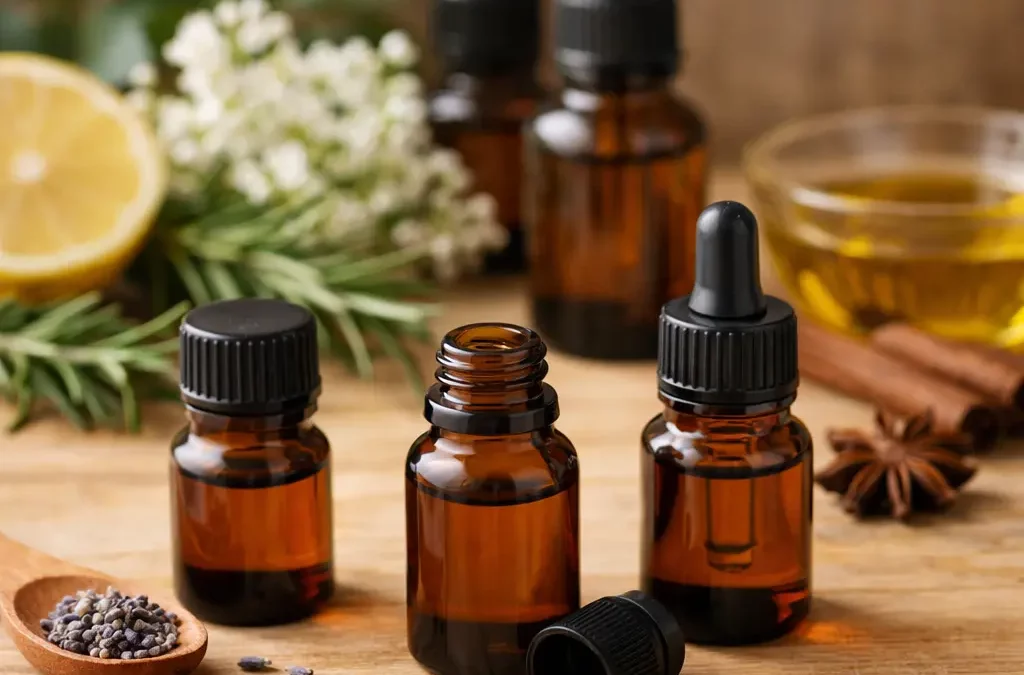
Essential oils are fascinating because of their aromatic potency and natural properties. But this potency imposes a simple rule : They are used with respect, moderation, and knowledge.Before diffusing them, applying them to the skin or inhaling them, it is essential to understand their limitations and the precautions that guarantee safe and harmonious use.
Why do essential oils require special precautions ?
Essential oils are highly concentrated extracts: a few milliliters can contain the equivalent of several kilograms of plants. This concentration explains :
- their aromatic efficiency
- their biological power
- but also their potential risks in case of misuse
They are neither classic perfumes nor harmless products. They are active substances, to be handled with discernment.
1. General precautions before use
Read the indications and contraindications carefully.
Each essential oil has a unique profile: composition, biochemical families, effects, limitations. Some are gentle (fine lavender, Ho wood), others very powerful (oregano, cinnamon, thyme thymol).
Follow the recommended dosages.
In aromatherapy, more is never better. One drop may be enough. An overdose may cause irritation, headaches, nausea or skin sensitivity.
Never apply pure essential oil to the skin
With rare exceptions, essential oils should be diluted in a vegetable oil. The standard dilution : 1 to 3% for non-therapeutic cutaneous use.
Avoid contact with eyes, mucous membranes and sensitive areas
Essential oils are lipophilic and penetrate quickly. In case of accidental contact, use a vegetable oil, never water.
2. Precautions for use during distribution
Broadcasting is one of the most appreciated uses, but it too requires some rules.
Ventilate the room before and after
A saturated atmosphere can cause irritation or headaches.
Limit the duration
- Passive diffusion : continuous but light.
- Active distribution : 10 to 20 minutes, no more.
Avoid spreading in the presence of :
- babies
- young children
- pregnant women
- people with asthma or sensitivity
Certain oils (eucalyptus globulus, peppermint, camphor rosemary) are particularly discouraged for diffusion by these audiences.
3. Precautions for use on the skin
Always dilute
Dilution protects the skin and improves penetration. Examples of vegetable oils: jojoba, sweet almond, apricot kernel.
Perform a skin test
Apply a small amount to the inside of your elbow and wait 24 hours.
Avoid skin-caustic oils
Some oils are irritating even when diluted :
- cinnamon
- oregano
- clove
- thyme thymol
They should be reserved for very controlled use.
4. Precautions for use via the respiratory route
Dry inhalation
One drop on a tissue is enough. Never bring the bottle directly to your nose.
Moist inhalation
Not recommended with oils rich in phenols or ketones. Always limit the duration.
5. Precautions for oral use
The oral route is the most delicate and should never be improvised. It requires the advice of a healthcare professional trained in aromatherapy.
Some oils can be toxic to the liver, kidneys or nervous system when ingested.
6. Precautions for vulnerable populations
Pregnant and breastfeeding women
Most essential oils are not recommended, especially during the first trimester. Some are strictly forbidden (sage, peppermint, exotic basil, etc.).
Babies and young children
Their nervous system is still developing. Absolute caution is advised.
People with asthma or epilepsy
Some oils can trigger respiratory or neurological reactions.
7. Photosensitivity : beware of the sun
Certain essential oils, in particular citrus (Lemon, bergamot, grapefruit) can cause skin reactions if exposed to sunlight. It is recommended to wait at least 8 hours before any exposure.
8. Conservation and security
- Preserve essential oils away from light and heat
- Close the bottles tightly to prevent oxidation
- Keep out of reach of children
- Never use an oxidized essential oil (risk of irritation)
Conclusion : Use essential oils with respect and knowledge
Essential oils are true concentrates of nature. Their aromatic richness and potency make them invaluable allies for creating an atmosphere, scenting a home, or enhancing wellness rituals. But their use requires caution, moderation and understanding.
By respecting these general precautions, everyone can enjoy their benefits while preserving their own safety and that of those around them.